
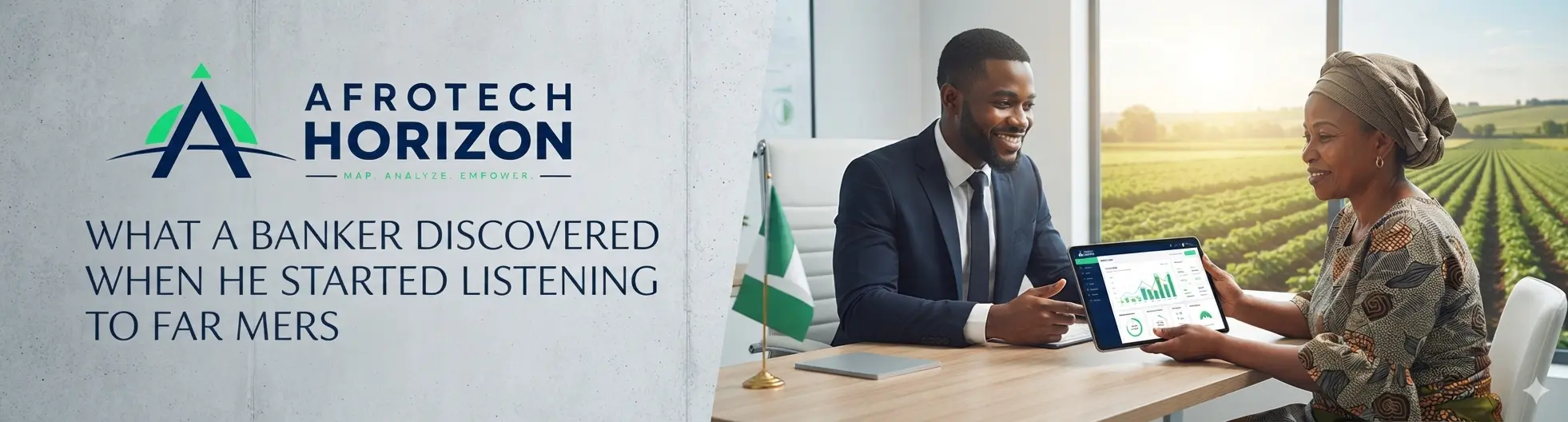
After spending years navigating the rigid structures of institutional banking, Watson Matsa realized that traditional financial systems were fundamentally mismatched with the realities of agricultural life. This realization led him to establish eSusFarm Africa, a technology platform focused on building data-driven risk management infrastructure for smallholder farmers.
How It Started Matsa's transition from banking to agritech stemmed from examining why traditional lenders fail to serve smallholder farmers effectively. Commercial banks are designed around predictable, monthly salary cycles, whereas agricultural cash flows are inherently seasonal, daily, or irregular.
Rigid Banking Models: Conventional financial products expect monthly loan repayments, ignoring crop growth cycles and unpredictable climate events.
Lack of Ongoing Risk Monitoring: Traditional banks lack continuous data tracking tools to assess and manage agricultural risk after disbursing funds.
Underwriting Gaps: Without reliable data on soil quality, weather patterns, and crop health, financial institutions view farmers as high-risk, unsecured borrowers.
Now the Board To solve these underwriting challenges, eSusFarm Africa developed an ongoing risk-management platform that collects granular agricultural data. The system integrates satellite climate tracking, soil analytics, and farmer-reported metrics to give financial institutions the assurance required to unlock credit and crop insurance.
Data-Driven Risk Assessment: Evaluating soil conditions and weather patterns allows lenders to finance specific inputs like targeted fertilizers and climate insurance.
Engaging Sceptical Survivors: The platform caters to experienced rural farmers aged 45 to 65 by utilizing word-of-mouth networks and demonstrating practical value rather than demanding complex reporting.
Ecosystem Multiplier Effects: Supporting individual smallholders drives broader economic activity across local seed providers, transport logistics, and rural supply chains.
To explore further analysis on agricultural technology, credit underwriting, and digital financial inclusion across Africa, visit AfroTech Horizon.
Why It Matters Matsa's journey demonstrates that farmers are not inherently unbankable; rather, modern banking architecture is too rigid for informal and seasonal income streams. Replacing rigid monthly repayment structures with flexible, data-driven underwriting models enables financial institutions to tap into agricultural value chains safely. Building digital infrastructure tailored to rural realities unlocks capital for millions of smallholders, boosting food security and regional economic growth.