
Malatsi wants South Africa’s AI policy back on track after false start

South Africa's Minister of Communications and Digital Technologies, Solly Malatsi, is working to rebuild the nation's national artificial intelligence policy framework. After withdrawing an earlier draft due to fabricated academic citations generated by AI, the ministry has instituted disciplinary proceedings and appointed an expert advisory panel to produce a verified policy.

Editorial portrait of South Africa's Minister Solly Malatsi and an AI policy advisor reviewing national artificial intelligence governance metrics in front of an AfroTech Horizon l
Minister of Communications and Digital Technologies Solly Malatsi addressing AI governance and regulatory policy frameworks.

South Africa's Minister of Communications and Digital Technologies, Solly Malatsi, is taking structured steps to restore credibility to the country's national artificial intelligence governance framework. The ministry pulled its initial policy document in April 2026 after discovering that unverified AI-generated citations and fabricated academic references had been included without proper human verification.

Addressing Internal Oversight and Consequence Management Following the withdrawal of the original draft policy, Minister Malatsi confirmed that internal disciplinary proceedings are actively underway regarding an official involved in the drafting and quality assurance process. The ministry emphasized that maintaining strict human oversight remains essential when utilizing artificial intelligence tools across government and policy-making procedures.

Disciplinary Action: Disciplinary proceedings continue against a departmental official following the citation errors.

Transparent Accountability: The department chose immediate public retraction over non-disclosure to uphold public trust and executive accountability.

Human Oversight Standards: The incident underscores the risks of unsupervised generative AI usage within public sector drafting.

Expert Panel and Revised Drafting Timeline To establish a verified policy document, the ministry appointed an advisory panel led by Professor Benjamin Rosman from the Wits Mind Institute. The panel is tasked with reconstructing a national policy framework tailored to South Africa's digital ecosystem.

To explore further analysis on artificial intelligence governance, regulatory policy, and digital transformation across Africa, visit AfroTech Horizon.

Strategic Focus on Enabling Regulation Minister Malatsi noted that the revised draft aims for presentation to the Cabinet by the end of the financial year in March 2027. The department seeks an enabling regulatory framework that balances consumer safeguards and digital sovereignty with sectoral innovation and growth.


Get the next one by email

Policy & Regulation

Nigeria’s identity agency says its database is locally hosted and managed by staff

The National Identity Management Commission has reaffirmed that Nigeria's national identity database is hosted locally within the country and managed entirely by internal staff. As the agency scales enrolment toward a 95 per cent national coverage target, it is implementing local data hosting and user consent management tools across its identity authentication services.

AfroTech Horizon Newsroom 2 min read

AI & Emerging Technology

OnePlus 16 vs RedMagic 12 Pro+: Which gaming phone should you buy?

Comparing the OnePlus 16 and the RedMagic 12 Pro+ highlights two distinct approaches to mobile gaming hardware. Powered by Qualcomm's Snapdragon 8 Elite Extreme Gen 6 processor, both smartphones target high-performance gaming, with OnePlus prioritising versatile photography and RedMagic focusing on active fan cooling.

AfroTech Horizon Newsroom 2 min read

Policy & Regulation

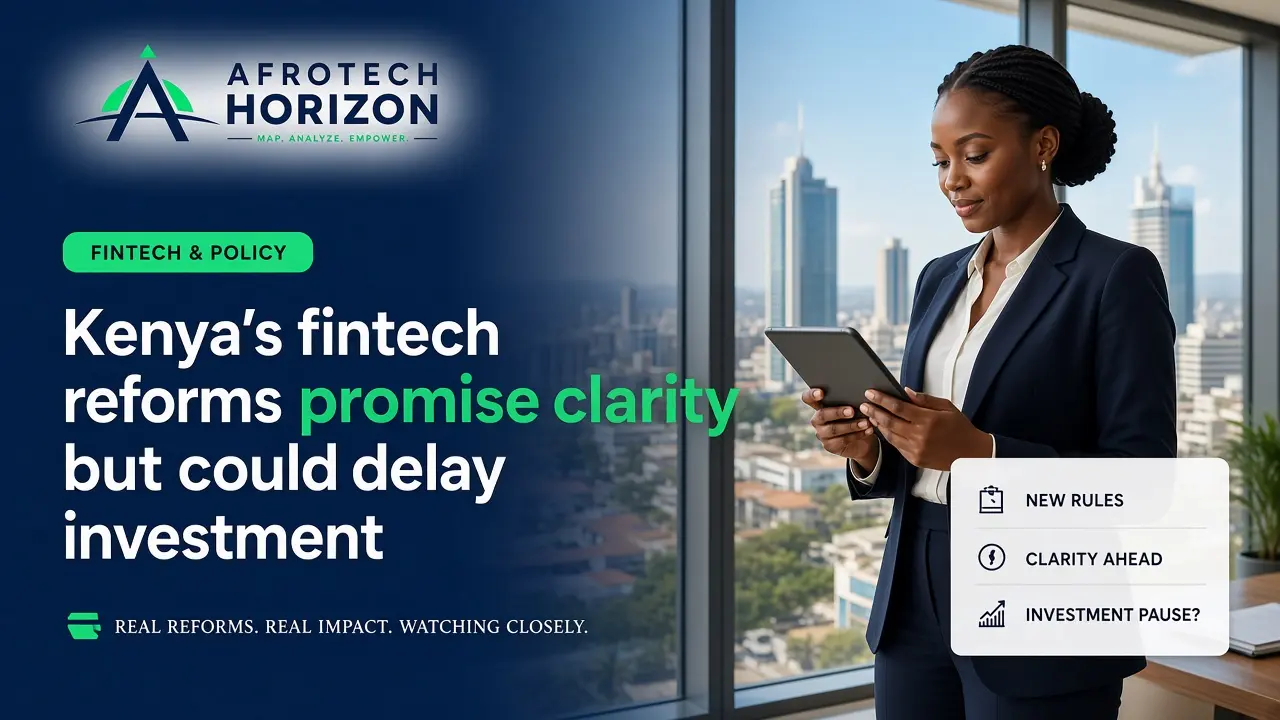
Kenya’s fintech reforms promise clarity but could delay investment

Proposed amendments to Kenya's payment system regulations seek to give the Central Bank direct oversight over significant equity investments in payment firms. While the reforms aim to enhance market stability and compliance, required regulatory approvals could lengthen fundraising cycles for growing startups.

AfroTech Horizon Newsroom 2 min read