Moving Beyond Fragmented Software
For years, the average African small and medium enterprise (SME) ran on a chaotic patchwork of tools: accounting on local spreadsheets, sales conversations trapped in messaging apps, paper inventory ledgers in the warehouse, and manual bank transfers for vendor invoices.
This operational fragmentation worked fine during predictable economic periods. But in today's fast-moving market—where currency swings happen overnight and supply chains face sudden delays—managing a business through disconnected tools leads to costly stockouts, lost cash flow, and zero forward visibility.
Enterprise software in Africa has reached an inflection point: Cloud ERP is moving from a luxury for multinational corporations to the default operating system for mid-market businesses.
Cloud as the Default Operating Model
The drivers behind this enterprise surge are straightforward:
Zero Capital Expenditure: Cloud-native ERP replaces large upfront server investments with predictable, scalable monthly subscriptions.
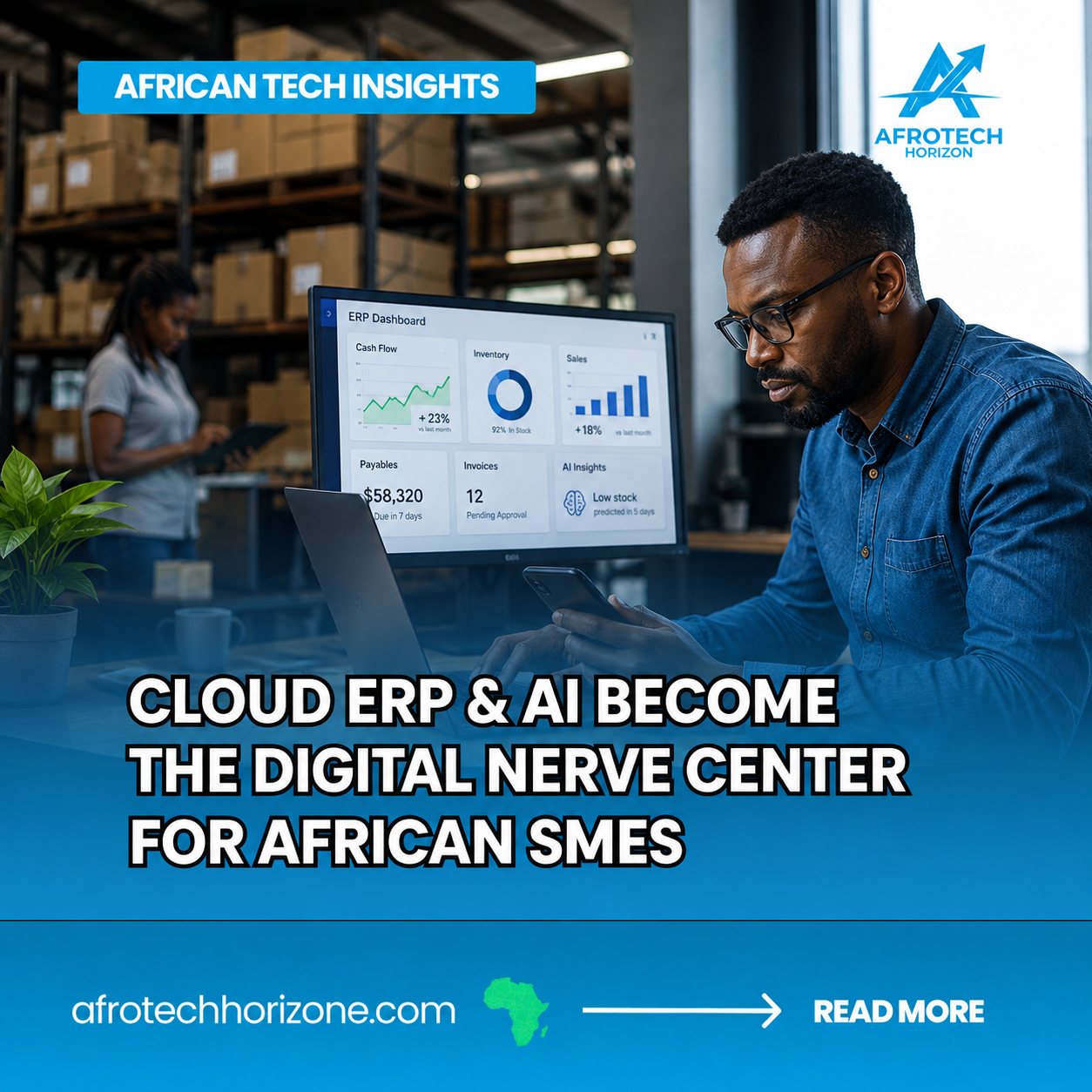
Embedded Business AI: Modern ERP platforms do not treat Artificial Intelligence as a standalone chatbot. They embed AI directly into daily workflows—predicting inventory stockouts before they occur, automating invoice reconciliation, and forecasting weekly cash flow requirements.
Mobile-First Accessibility: Field managers, sales agents, and warehouse operators can input and verify data directly from smartphones, eliminating manual data entry delays.
According to enterprise research across African markets, over 60% of medium-sized businesses plan to transition all core operations to cloud environments. A major reason is compliance and ecosystem integration: large corporate buyers and government procurement agencies now demand real-time digital auditing, tax compliance, and verified supply chain tracking before awarding contracts.
Cybersecurity Becomes an Existential Board Issue
As African SMEs digitize their core operations, their risk exposure shifts. Ransomware attacks, business email compromise, and unauthorized data breaches are no longer distant corporate threats; continent-wide cybercrime escalation means African organizations face ransomware attempts at rates significantly higher than the global average.
Consequently, cybersecurity has elevated to a primary board-level issue alongside cash flow management. SMEs are prioritizing cloud ERP systems that feature built-in encryption, role-based access controls, and automated compliance backups, ensuring that operational data remains secure against cyber extortion.
The part that is not about software contracts
When an African SME implements a clean-core cloud ERP, it stops reacting to economic crises and starts anticipating them. That structural clarity gives business owners the confidence to secure commercial loans, hire skilled local talent, and expand into neighboring markets. It transforms informal family enterprises into durable corporate institutions capable of competing globally.
Industry Takeaway
Cloud ERP systems embedded with practical AI tools have become the essential foundation for African SMEs seeking operational efficiency, creditworthiness, and supply chain resilience.
Source & Further Reading
SAP Africa News Center - The Essential Tech Trends for African SMEs in 2026