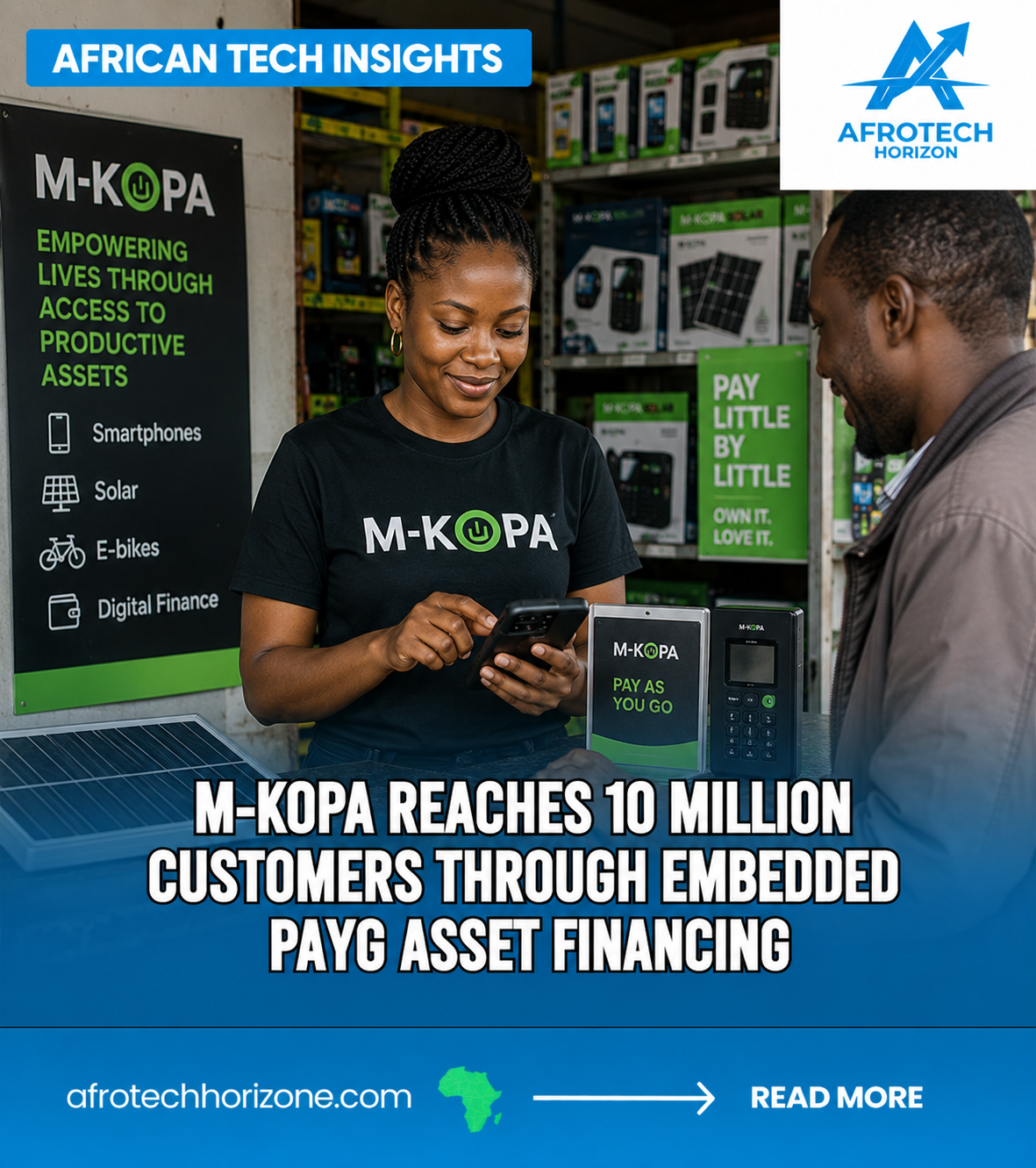
Underbanked consumers do not lack the desire to buy productive assets like smartphones, solar systems, or electric bikes—they lack the lump-sum capital required to buy them upfront. Traditional credit checks fail them because informal income leaves no paper trail.
Why IoT-enabled micropayments beat traditional loans
By embedding smart technology directly into physical hardware, M-KOPA allows consumers to pay for assets in small daily increments via mobile money. If a customer misses a payment, the device pauses automatically until account activity resumes. The physical asset acts as its own collateral, eliminating the need for formal credit scoring.
How to turn asset financing into a broader platform
A completed loan is just the beginning of a customer relationship. Once a user pays off their initial asset, they have built a verifiable credit history on the platform. M-KOPA uses that payment data to unlock subsequent financial products—like cash loans, medical insurance, and upgraded equipment—turning a single transaction into lifetime customer value.
The part that is not about device sales
A smartphone or a solar home system is not a luxury item in the informal economy; it is an income-generating engine. Giving a daily wage earner access to technology enables them to run a business, take digital payments, and access information that directly raises their standard of living.
Industry Takeaway
Combining IoT technology with mobile money micropayments creates an effective engine for expanding financial inclusion to informal economies.