
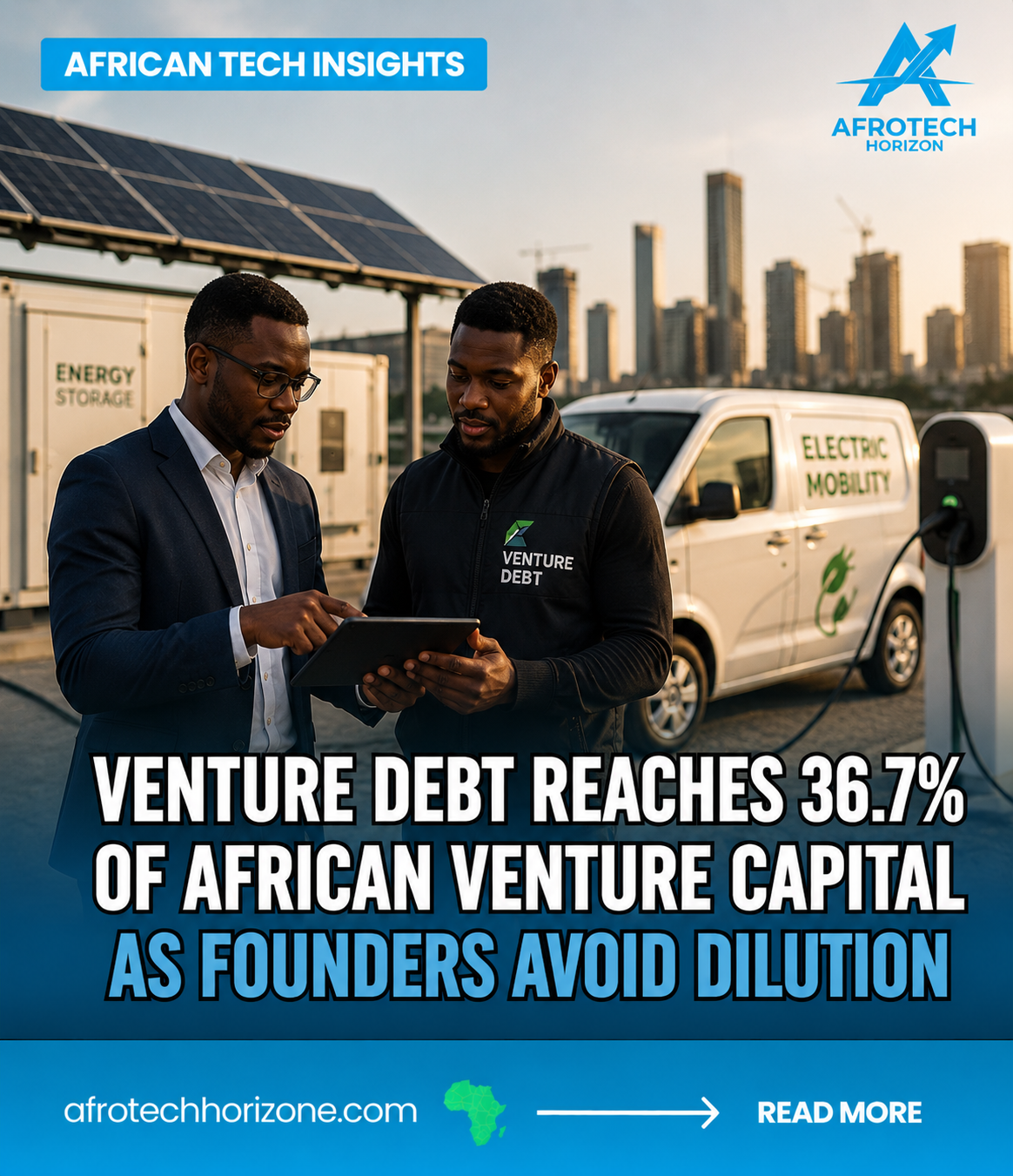
Selling permanent equity in your company to buy short-term physical assets—like delivery vans, solar panels, or inventory; is terrible capital allocation. Equity is the most expensive money a founder can take. As hardware and asset-heavy business models scale across Africa, founders are turning to venture debt to fund operational hardware.
Why debt works better for asset-heavy tech
If your business generates predictable revenue from physical assets, those assets can secure a loan. Debt financing reached $614 million in H1 2026 because scale-ups in solar energy, smartphone financing, and electric mobility realized that borrowing money against cash-flowing hardware preserves equity for strategic software milestones.
How to avoid debt traps early on
Never use debt to cover operational burn or unproven business models. Debt requires strict repayment schedules regardless of your monthly performance. Only leverage debt facilities when you have clear unit economics and predictable cash flows that directly cover interest payments.
The part that is not about cap tables
Financial maturity requires using the right tool for the job. When founders master capital structuring, they build durable companies that do not rely on global venture capital sentiment to keep the lights on. That financial independence is what protects regional sovereignty in tech.
Industry Takeaway
Founder literacy around capital structuring is maturing rapidly, with debt instruments becoming the default financing mechanism for hardware and asset-heavy scale-ups.
Read the complete venture market analysis on Launch Base Africa.