
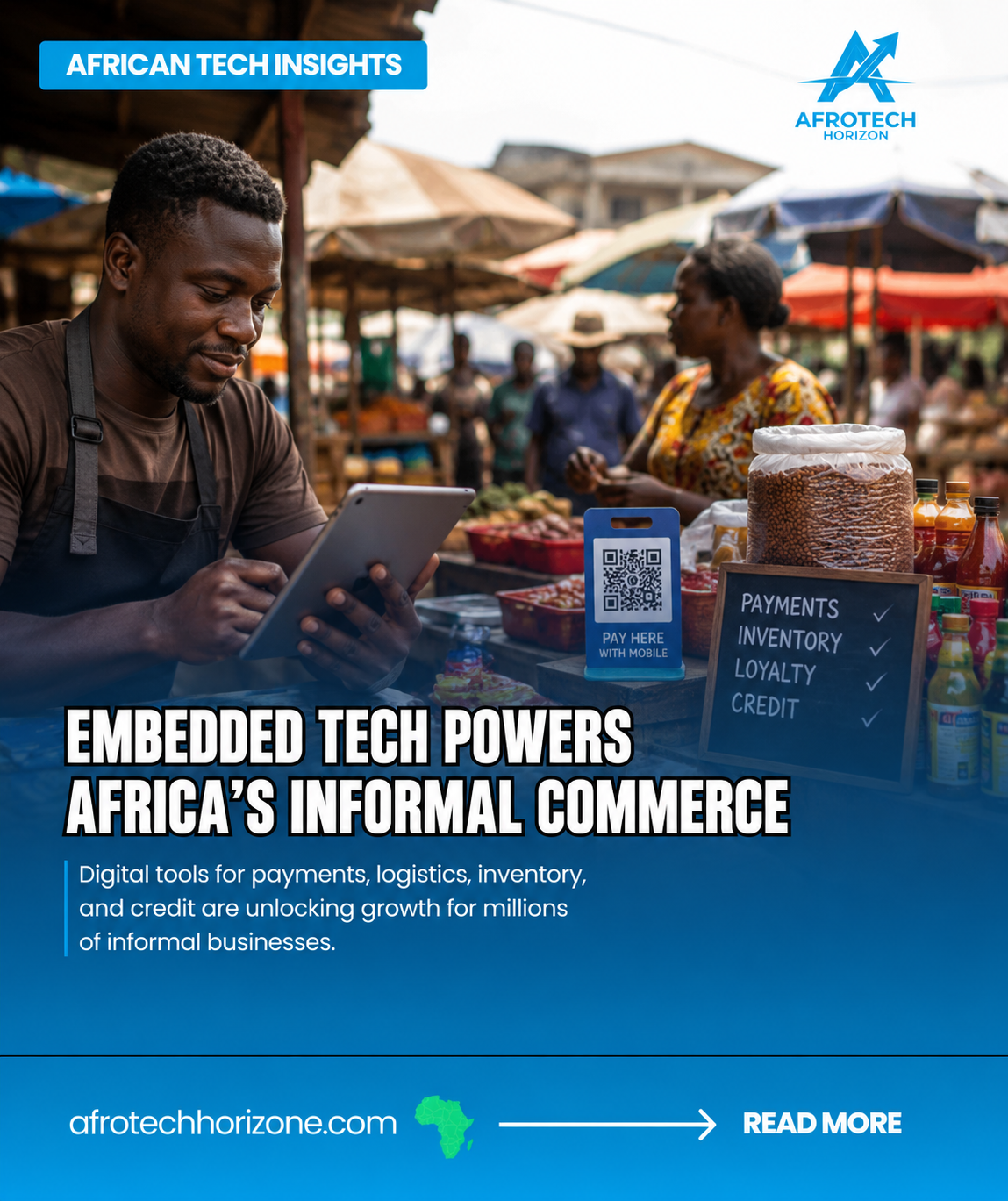
The Invisible Engine of African Commerce
If you walk through the open-air markets of Lagos, Nairobi, or Douala, you are looking at the primary engine of Sub-Saharan trade. Informal retail accounts for up to 80% of total consumer purchases across the continent. Yet, for decades, this multi-billion-dollar economy operated entirely in the dark: cash-heavy transactions, pen-and-paper inventory tracking, and unorganized wholesale procurement that forced shopkeepers to close their doors for hours just to restock inventory from distant distributors.
Silicon Valley software models failed in this environment because they demanded radical behavior change. Asking a neighborhood shopkeeper or a freelance truck driver to download a complex standalone application, manage multiple passwords, and abandon cash was a non-starter.
The breakthrough in 2026 is not a new product category—it is embedded technology. The fastest-growing B2B platforms are grafting financial, logistics, and inventory management tools onto the daily workflows merchants already trust.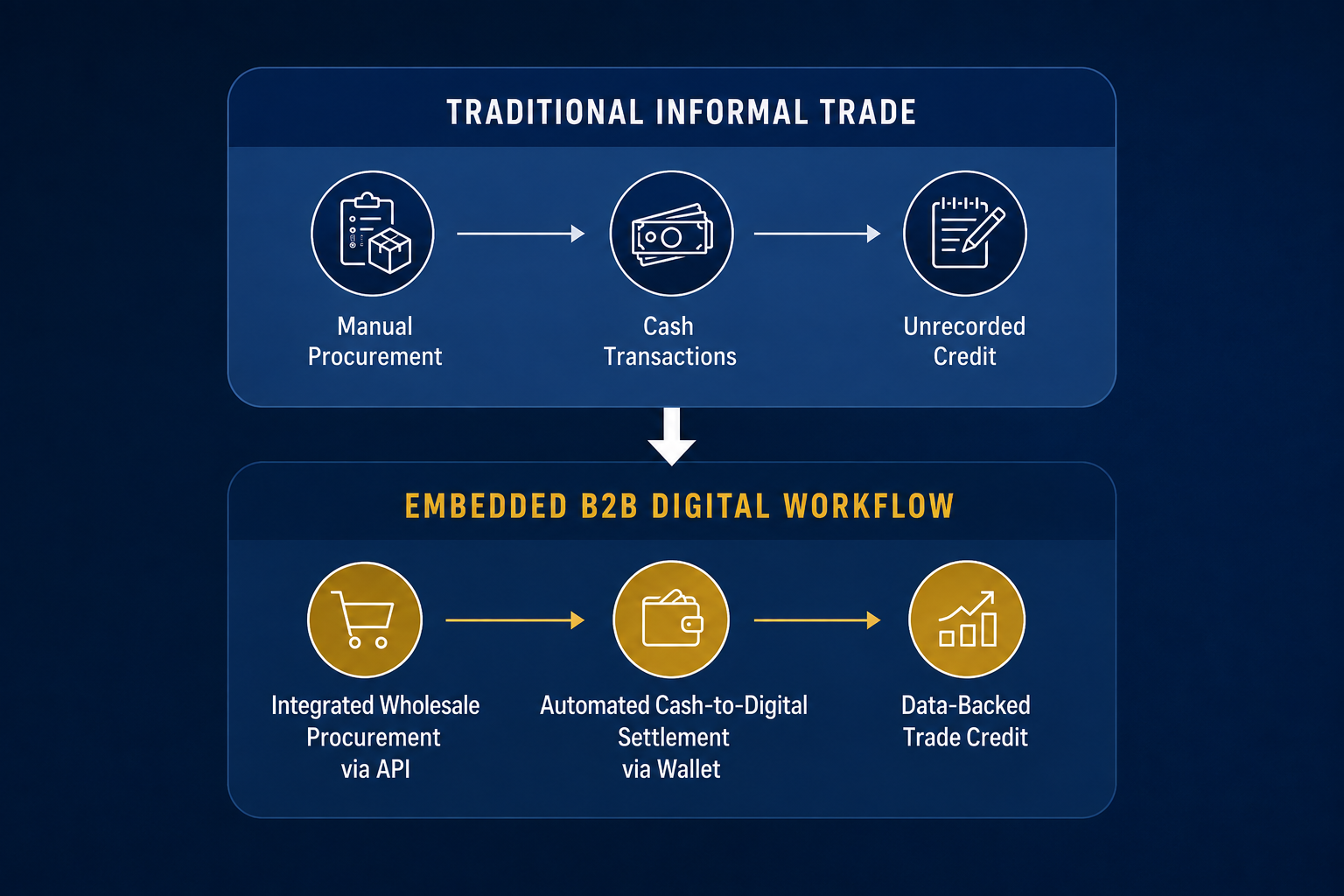
Why Embedded Logistics Beats Standalone Apps
Consider freight and last-mile logistics. Companies like Lori Systems in East Africa didn't succeed by asking fleet owners to rethink freight management from scratch. Instead, they integrated route optimization and freight matching directly into existing dispatch routines, cutting transport costs by up to 20%.
Similarly, platforms like Leya Labs in Francophone West Africa supply the "digital pipes" that keep mobile money cash points operational. By helping local cash agents monitor liquidity in real time and providing instant micro-top-ups, agents avoid running out of float—increasing their daily earnings by up to 50% without altering how they handle walk-up customers.
In agricultural trade, Nigeria's Winich Farms replaced risky cash-on-delivery exchanges with a proprietary digital debit card system. As soon as a smallholder farmer sells their harvest, funds land instantly on their card. That transaction log gives the farmer a formal credit record for the first time, while enterprise food buyers get a transparent, middleman-free supply chain.
Building the "Finance OS" for Informal Enterprise
The shift toward B2B technology is fundamentally an economic one. Consumer-facing apps suffer from elevated churn, high user acquisition costs, and price-sensitive retail users. B2B software, by contrast, targets structural problems: fragmented supply chains, opaque inventory pricing, and lack of trade credit.
When a B2B platform digitizes a merchant's inventory ordering, it creates a real-time ledger of their daily revenue. Software enablers can then partner with financial institutions to underwrite working capital loans automatically. The merchant gets access to stock financing during peak seasonal demand, and the software provider earns reliable margin fees on both the logistics and the underlying financial transaction.
The part that is not about tech valuations
Informal trade is not an anomaly to be eradicated; it is a vital social safety net that feeds hundreds of millions of families. Digitizing these trade flows does not mean forcing informal traders into rigid corporate boxes. It means giving an independent market vendor the tools to protect their cash flow, negotiate better wholesale prices, and pass those savings down to their neighborhood. That quiet resilience is what builds durable economic stability across cities.
Industry Takeaway
B2B enablers that slot seamlessly into existing informal workflows—rather than forcing user behavior shifts—are capturing the highest customer retention and gross margins in African tech
For more insights, check : Hackhouse Africa - The State of African Tech in 2026: Trends and Predictions