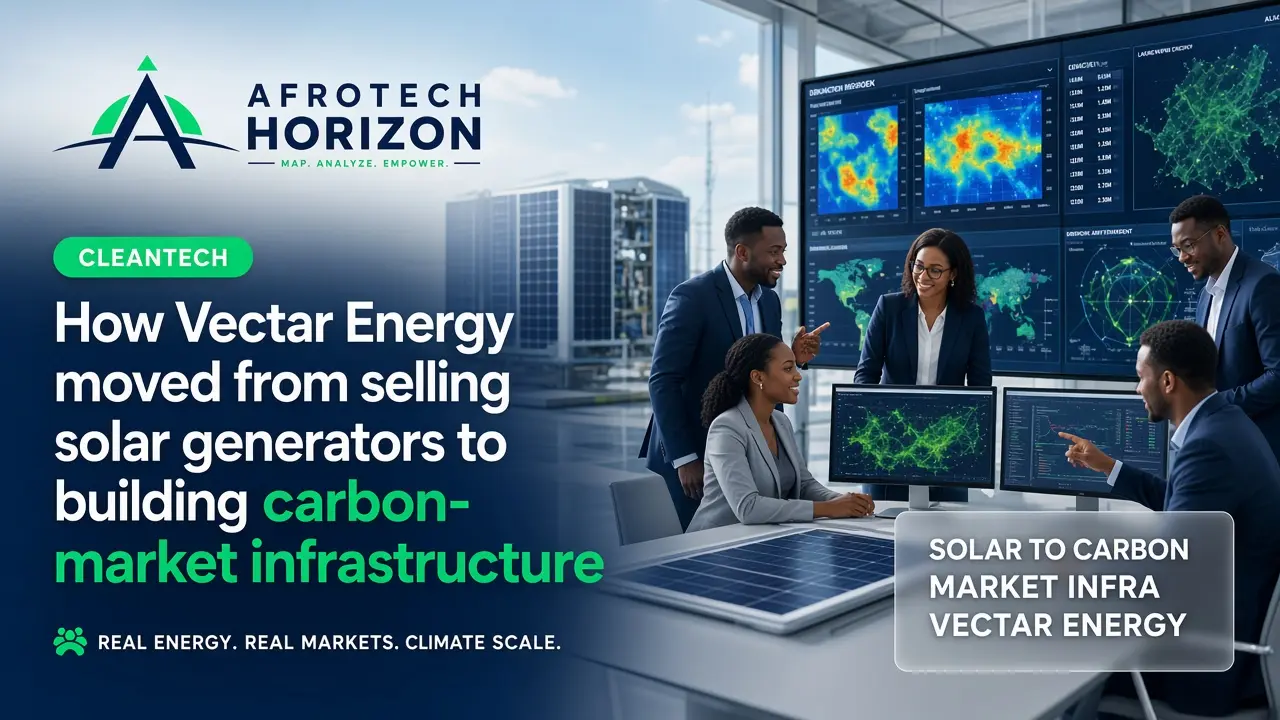
Nigerian clean technology venture Vectar Energy is transforming how small-scale solar installations across Africa connect to international climate finance. Originally established to manufacture and sell portable solar generators, the company has pivoted toward digital infrastructure, constructing software and verification tools that allow distributed renewable energy projects to participate in global carbon credit markets.
Shifting From Product Hardware to Carbon-Market Infrastructure Vectar Energy’s initial business model focused on distributing portable solar units as alternatives to small petrol generators. However, high hardware costs and consumer affordability constraints prompted a strategic transition toward climate finance services.
Founding Mission: Established in 2020 by Deborah Fadeyi to replace fuel-powered generators with solar power stations, addressing health hazards like carbon monoxide emissions.
Hardware Affordability Challenges: Despite offering subscription payment options and rent-to-own models, customer adoption was hindered by high upfront hardware costs.
Strategic Pivot: Evolving into a digital climate-finance platform to solve backend monetization barriers for distributed solar developers across Africa.
Aggregating Distributed Solar Through ecoWise To help small renewable energy operators access international carbon markets, Vectar Energy launched ecoWise, an aggregation platform designed to bundle distributed solar capacity into single certified portfolios.
Portfolio Aggregation: Bundling small-scale commercial, industrial, and residential solar installations to meet the high volume thresholds required for global carbon registries.
IoT and API Verification: Utilizing internet-of-things sensors and automated API integrations to gather verifiable telemetry data on electricity generation and avoided carbon emissions.
International Certification: Listing aggregated project cohorts on Gold Standard registries to generate verified carbon offsets for global buyers.
To explore further technical analysis on renewable energy finance, carbon credit verification, and clean technology infrastructure across Africa, visit AfroTech Horizon.
Unlocking Climate Finance for African Energy Transition Vectar Energy’s shift from hardware manufacturing to digital carbon infrastructure highlights a crucial evolution in African cleantech. By automating data verification and lowering participation barriers for local developers, the ecoWise platform provides a scalable template for financing Africa’s renewable energy expansion.